Occlusion is the term used to describe how your upper and lower teeth come together. While it may sound technical, occlusion plays a central role in chewing efficiency, restoration longevity, and overall jaw comfort.
When teeth meet in a balanced way, chewing forces are distributed evenly. When alignment shifts or support is lost, force patterns may change. Over time, this can influence tooth wear, restoration stability, and muscle strain.
Understanding occlusion helps explain why dentists evaluate bite relationships carefully before recommending treatment.
What Is Occlusion?
Occlusion refers to:
- How teeth contact when you close your mouth
- The relationship between upper and lower arches
- How force is distributed during chewing
- The alignment of teeth during jaw movement
Stable occlusion supports efficient function. It allows chewing pressure to be shared across multiple teeth instead of concentrated in isolated areas.
Why Occlusion Matters
Balanced occlusion contributes to:
- Even wear patterns
- Reduced strain on restorations
- Stable jaw movement
- Comfortable chewing
When occlusion becomes imbalanced, patients may notice:
- Uneven contact
- Tooth sensitivity
- Jaw tension
- Increased wear in specific areas
These changes often develop gradually rather than suddenly.
How Missing Teeth Influence Occlusion
When a tooth is lost and not replaced, contact patterns change.
Potential consequences include:
- Adjacent teeth drifting into the gap
- Opposing teeth over-erupting
- Uneven chewing pressure
Our article on adjacent teeth shifting after tooth loss explains how alignment changes can develop over time.
Loss of posterior support may also contribute to bite imbalance. This is discussed in our guide to bite collapse from missing molars.
Occlusion and Dental Restorations
Before placing crowns, bridges, or implants, dentists evaluate occlusion to ensure force balance.
Improper alignment may increase stress on:
- Bridge connectors
- Crown margins
- Implant-supported restorations
Our discussion of how bite forces affect dental restorations explains why force distribution is critical for long-term success.
Restorative planning always considers occlusal relationships.
Types of Occlusal Imbalance
Occlusal imbalance can take different forms, including:
- Premature contact, where one tooth meets before others
- Crossbite relationships
- Excessive wear patterns
- Loss of vertical dimension due to missing posterior teeth
Each pattern affects chewing dynamics differently.
The Role of Jaw Muscles and Joints
Occlusion does not involve teeth alone. Jaw muscles and joints respond to bite patterns.
When occlusion is unstable:
- Muscles may compensate by working harder
- Jaw movement may become less efficient
- Tension may increase during chewing
While not every occlusal variation causes discomfort, persistent imbalance can influence long-term function.
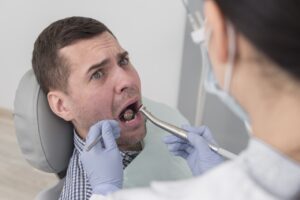
Evaluating Occlusion During Dental Visits
Dental professionals assess occlusion by examining:
- Contact points when biting
- Movement patterns during jaw opening and closing
- Wear patterns on teeth
- Stability of restorations
At Brightest Smiles Dentist Finder, providers evaluate occlusal balance as part of comprehensive restorative planning. This ensures that new restorations integrate smoothly into existing bite relationships.
Can Occlusion Be Corrected?
In many cases, occlusal concerns can be managed through:
- Selective adjustment
- Orthodontic intervention
- Replacement of missing teeth
- Redesign of restorations
- Protective devices for grinding habits
Treatment depends on the underlying cause and severity.
Frequently Asked Questions
What does occlusion mean in dentistry?
Occlusion refers to how upper and lower teeth meet and interact during chewing and rest.
Is slight bite imbalance normal?
Minor variations may exist without causing symptoms. Significant imbalance may influence wear and comfort over time.
Can missing teeth affect occlusion?
Yes. Tooth loss can change contact patterns and redistribute force.
Do implants affect occlusion?
Implants must be carefully integrated into the bite to ensure balanced force distribution.
How do I know if my occlusion is unstable?
Signs may include uneven wear, jaw tension, or changes in how your teeth meet. A dental evaluation can assess alignment.
Occlusion plays a foundational role in oral function. When teeth meet in a balanced way, chewing forces are distributed evenly and restorations are supported effectively. When alignment changes due to tooth loss or shifting, subtle imbalances may develop over time. Careful evaluation helps maintain long-term stability and comfort.
This article is for general educational purposes only and does not replace professional dental advice. A licensed dental professional can evaluate your specific condition and recommend appropriate treatment based on your oral health needs.