
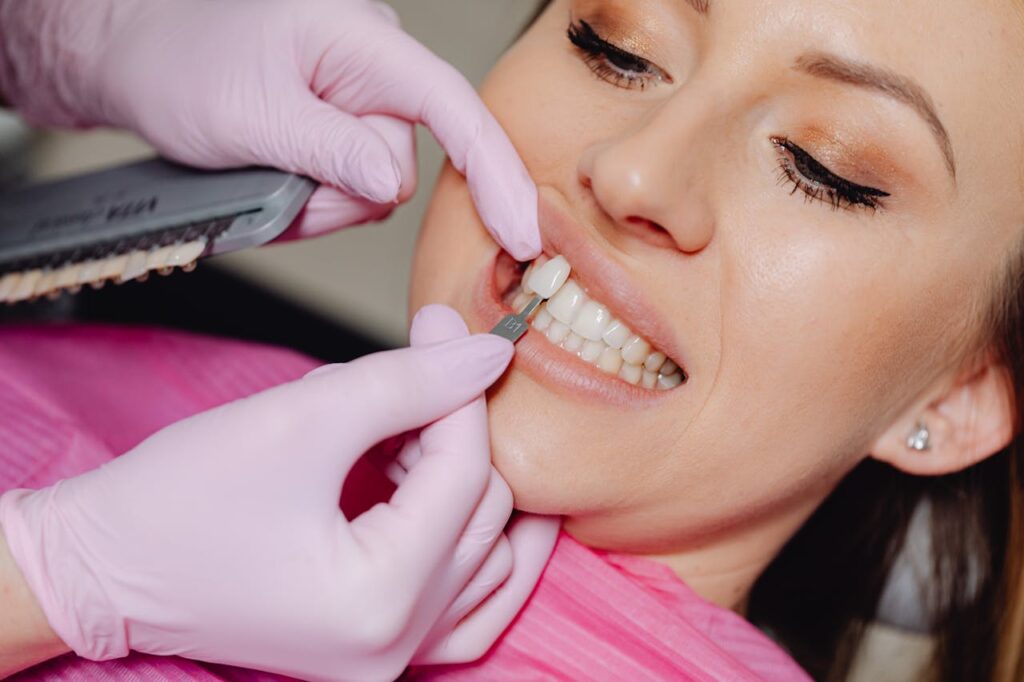
Veneers are thin custom shells bonded to the front of teeth to improve shape, color, and alignment. They are commonly used to address chips, discoloration, gaps, and uneven teeth as part of cosmetic smile enhancement.
If you are looking to improve the appearance of chipped, stained, or uneven teeth, veneers may be an option to consider. Veneers are designed to enhance the visible front surface of teeth and create a more balanced smile.
Brightest Smiles Dentist Finder helps patients compare veneer providers across Houston, San Antonio, and Lubbock.
If you are exploring additional cosmetic treatments, you can review available options through our full services directory.
What Are Veneers?
Veneers are thin, custom-made shells bonded to the front surface of teeth. They are typically made from porcelain or composite materials.
Veneers are commonly used to address:
- Discoloration that does not respond to whitening
- Minor chips or cracks
- Gaps between teeth
- Slight misalignment
- Uneven tooth shape
A consultation helps determine whether veneers are appropriate based on your goals and oral health.
Porcelain vs Composite Veneers
There are two primary types of veneers:
Porcelain Veneers
Porcelain veneers are fabricated in a dental laboratory and bonded to the tooth. They are known for durability and natural appearance.
Composite Veneers
Composite veneers are applied directly to the tooth surface during a clinical visit. They may be used for smaller cosmetic adjustments.
Your dentist will discuss which material aligns with your expectations and dental condition.
The Veneer Process
The veneer process generally includes:
- Consultation and smile evaluation
- Tooth preparation
- Impression or digital scanning
- Fabrication of veneers
- Final bonding and adjustments
In some cases, minor enamel removal is necessary to ensure proper fit and natural appearance.
Are Veneers Permanent?
Because a small amount of enamel is typically removed, veneers are considered a long-term cosmetic solution. They may need replacement over time due to normal wear.
Maintaining oral hygiene and attending routine visits, including professional teeth cleaning, supports the longevity of veneers.
Veneers vs Teeth Whitening
Veneers are often chosen when discoloration does not respond to whitening.
If your primary concern is mild staining, your dentist may first discuss teeth whitening before considering veneers.
An evaluation ensures the most conservative option is considered.
Veneers and Structural Concerns
If a tooth is severely damaged or structurally compromised, a veneer may not be sufficient. In those cases, a crown or other restorative treatment may be recommended.
For more complex smile reconstruction, coordination with a prosthodontist may be considered depending on the extent of treatment.
Maintaining Veneers
To help maintain veneers:
- Brush and floss daily
- Avoid biting hard objects
- Wear a nightguard if grinding is present
- Attend regular dental checkups
If grinding or jaw tension is present, evaluation by a TMJ specialist may be appropriate to protect restorations.
Areas We Serve in Texas
Brightest Smiles Dentist Finder connects patients with veneer providers across Texas, including Houston, Lubbock, and San Antonio.
Each city page allows you to compare local cosmetic dentists offering veneer services.
Frequently Asked Questions
How long do veneers last?
With proper care, veneers may last many years. Longevity depends on material type and maintenance.
Are veneers painful?
Local anesthesia may be used during preparation. Mild sensitivity after placement is possible but usually temporary.
Can veneers fix crooked teeth?
Veneers may improve the appearance of mild misalignment. Significant bite concerns may require orthodontics.
Do veneers stain?
Porcelain veneers are resistant to staining, though maintaining good hygiene remains important.
Are veneers reversible?
Because enamel is typically removed during preparation, veneers are considered a long-term treatment.
This page is intended for informational purposes and does not replace a professional dental consultation. Treatment recommendations are individualized based on clinical evaluation and patient needs.