
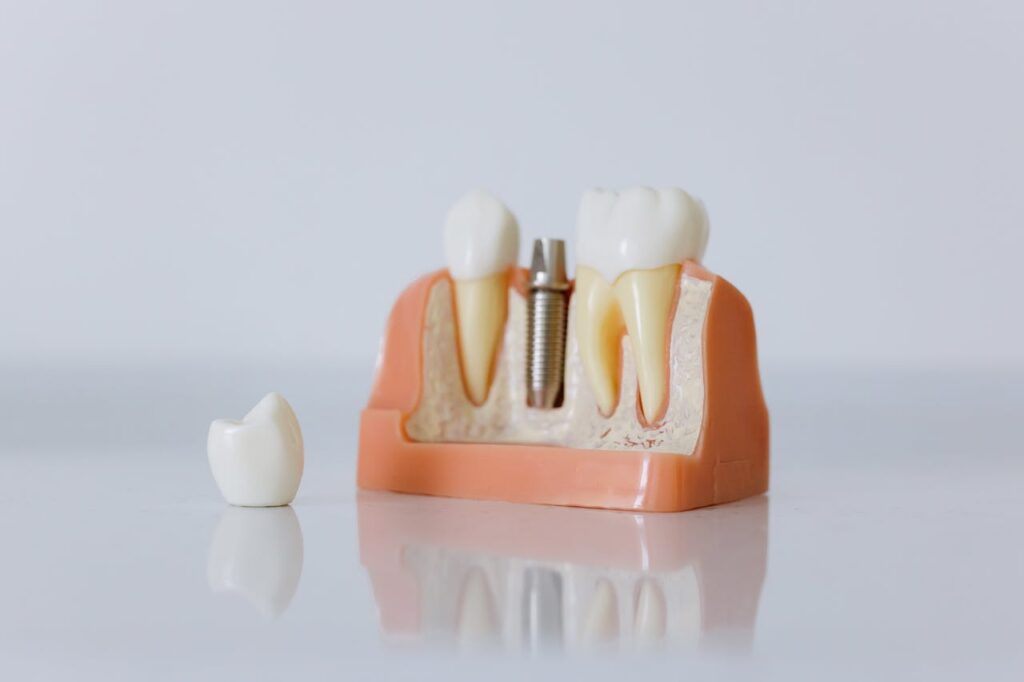
Dental implants replace missing teeth using a titanium post that integrates with the jawbone to support a crown, bridge, or denture. They are designed to restore function, stability, and appearance. A dental evaluation determines bone health, candidacy, and the most appropriate implant approach.
Missing teeth can affect more than appearance. They may influence chewing comfort, speech clarity, and long-term jaw health. Dental implants are designed to replace missing teeth in a way that restores stability and supports natural function.
Brightest Smiles Dentist Finder helps patients across Texas connect with qualified implant providers. If you are comparing tooth replacement options, you can begin by reviewing our full services directory.
What Are Dental Implants?
A dental implant is a small titanium post placed into the jawbone to act as an artificial tooth root. Over time, the implant integrates with the surrounding bone, creating a stable foundation for a crown, bridge, or denture.
Implants are commonly used to:
- Replace a single missing tooth
- Support multiple missing teeth
- Stabilize dentures
- Restore full arches
Unlike removable options, implants are fixed in place and designed to function similarly to natural teeth.
How the Dental Implant Process Works
The implant process typically involves multiple phases. While timelines vary depending on healing and individual health factors, the general stages include:
- Comprehensive exam and imaging
- Treatment planning
- Implant placement
- Healing and bone integration
- Final restoration placement
Careful planning helps ensure proper positioning and long-term stability.
If underlying oral health concerns such as gum disease or infection are present, these issues are usually addressed first to protect implant success.
Who May Be a Candidate for Dental Implants?
Implant candidacy depends on several factors, including:
- Adequate bone density
- Healthy gums
- Overall medical history
- Non-smoking or willingness to reduce risk factors
Patients with bone loss may still be candidates, but additional procedures may be discussed during evaluation.
A consultation allows the provider to assess your specific situation and determine whether implants are appropriate.
Dental Implants vs Other Tooth Replacement Options
Patients often compare implants with traditional tooth replacement solutions.
For example, removable dentures may be suitable for certain cases, particularly when multiple teeth are missing. Implants, however, can offer increased stability and reduced movement during eating or speaking.
When replacing a single tooth, implants can help preserve adjacent teeth because they do not rely on neighboring teeth for support.
The right option depends on your oral health, long-term goals, and personal preferences.
Single Tooth, Multiple Teeth, or Full Arch Implants
Dental implants can be customized based on how many teeth are missing.
- Single tooth implant: Replaces one missing tooth with a crown
- Implant-supported bridge: Replaces multiple teeth
- Full arch implant restoration: Supports a full upper or lower set
Your dentist will explain the structural differences and what to expect from each approach.
Healing and Aftercare
Healing time varies. After implant placement, the jawbone requires time to integrate with the implant surface. This process supports long-term stability.
Post-procedure care typically includes:
- Following oral hygiene instructions
- Attending follow-up visits
- Avoiding excessive pressure during healing
Routine maintenance, including professional teeth cleaning, plays an important role in protecting gum health around implants.
Are Dental Implants Painful?
Most implant procedures are performed under local anesthesia. Many patients describe the experience as manageable, similar to other routine dental procedures.
If dental anxiety is a concern, discussing comfort options in advance can help you feel more at ease. In some cases, sedation dentistry may be available depending on the provider and treatment plan.
When Missing Teeth Also Cause Pain
Sometimes a tooth is removed due to infection or structural damage. If you are currently experiencing pain, swelling, or trauma, your first step may involve evaluation by an emergency dentist to stabilize the situation before considering long-term replacement options.
Once the area has healed appropriately, implant placement may be discussed as part of a structured restoration plan.
Choosing an Implant Provider
Because implant treatment involves surgical placement and restorative design, selecting an experienced provider is important. A thorough consultation should include:
- Clear explanation of findings
- Imaging review
- Discussion of alternative options
- Realistic timelines
- Long-term maintenance expectations
If you have questions about specialist involvement, your provider may coordinate care with an oral surgeon or restorative specialist when appropriate.
Transparency and planning are key to building confidence in the process.
Areas We Serve in Texas
Brightest Smiles Dentist Finder connects patients with implant providers across Texas, including Houston, San Antonio, and Lubbock.
Each location page allows you to explore available dental professionals and compare implant-related services locally.
Frequently Asked Questions
How long do dental implants last?
With proper care and regular dental visits, implants can last many years. Longevity depends on oral hygiene, health conditions, and lifestyle factors.
Can smokers get dental implants?
Smoking can affect healing and long-term stability. A dentist will review your health history and discuss potential risks before proceeding.
What happens if I do not replace a missing tooth?
Over time, missing teeth can lead to shifting, bite changes, and bone loss in the jaw. Replacement helps maintain structural balance.
Are implants better than dentures?
Each solution has benefits and limitations. Implants provide fixed stability, while dentures may be appropriate in certain clinical situations. A consultation helps determine the right fit.
How do I know if I have enough bone for implants?
Digital imaging and examination allow your dentist to evaluate bone density and structure before recommending treatment.
This page is intended for informational purposes and does not replace a professional dental consultation. Treatment recommendations are individualized based on clinical evaluation and patient needs.